
SkyMul Trig Nest · the hardware
Drop it on the conex.
Your site is live.
A solar drone station for jobsites that don’t have power or signal yet. One lift. About 30 minutes. We fly it from Atlanta — your crew never touches it.
- No trench, pad or electrician
- No pilot or license
- Leased or owned
Day zero
No power. No signal. No eyes.
Every job starts the same way: a field, a conex and a list of things that have to happen before anyone can see what’s going on out there.
Power. Trench. Pad. Trades. Weeks of it — and those are the weeks the dirt moves and the footings go in. The part of the job that gets buried first is the part nobody is recording.
You can’t track what you can’t see. So we made the seeing show up first.
The usual way
Order temp powerDig the trenchPour a padSchedule the tradesWait for internetThen mount a camera
With Trig Nest
One lift.
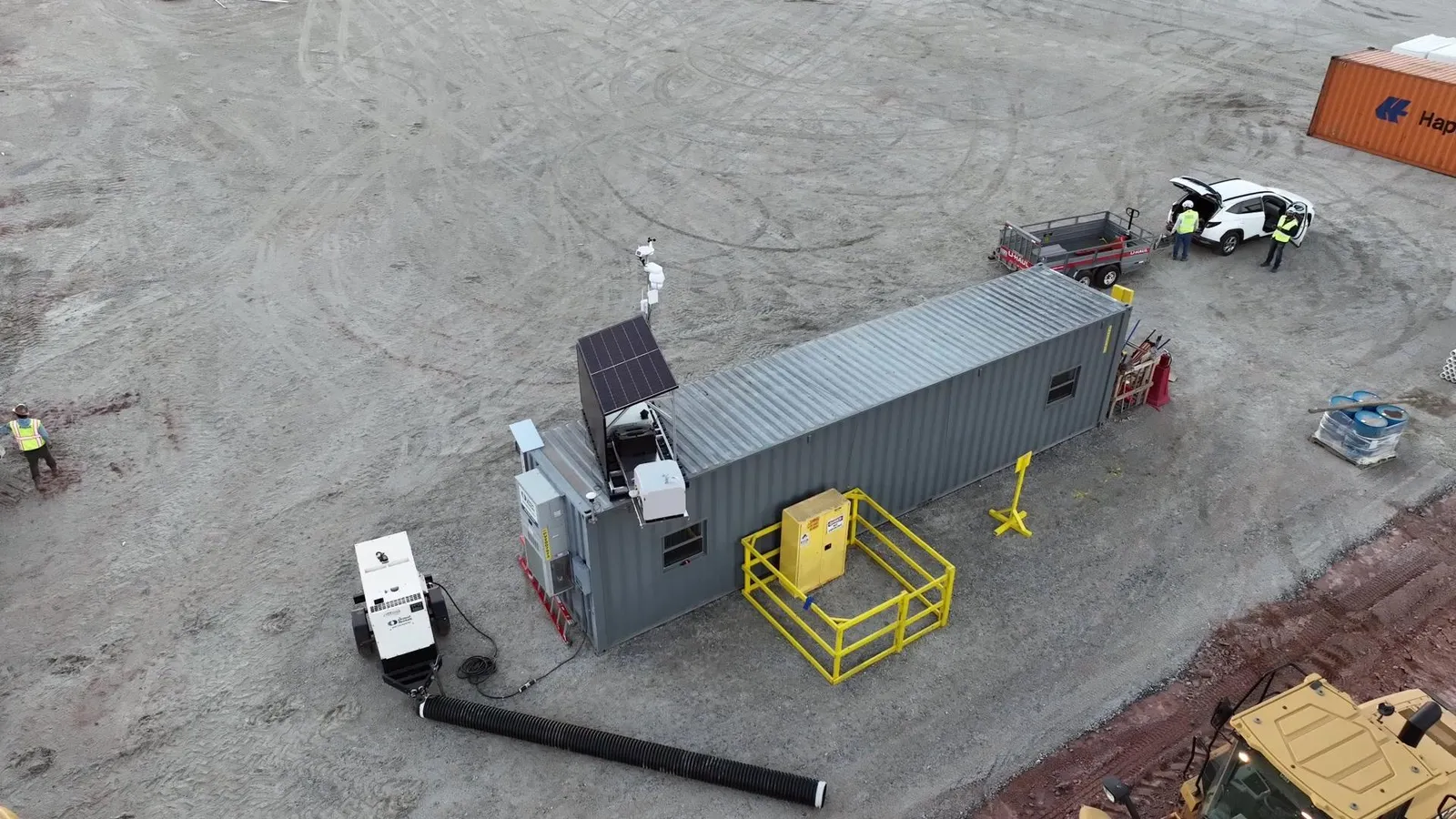
8 ft × 4 ft. Forklift. Top of the conex. Done.
Take it apart
Power, eyes and a drone. One lift.
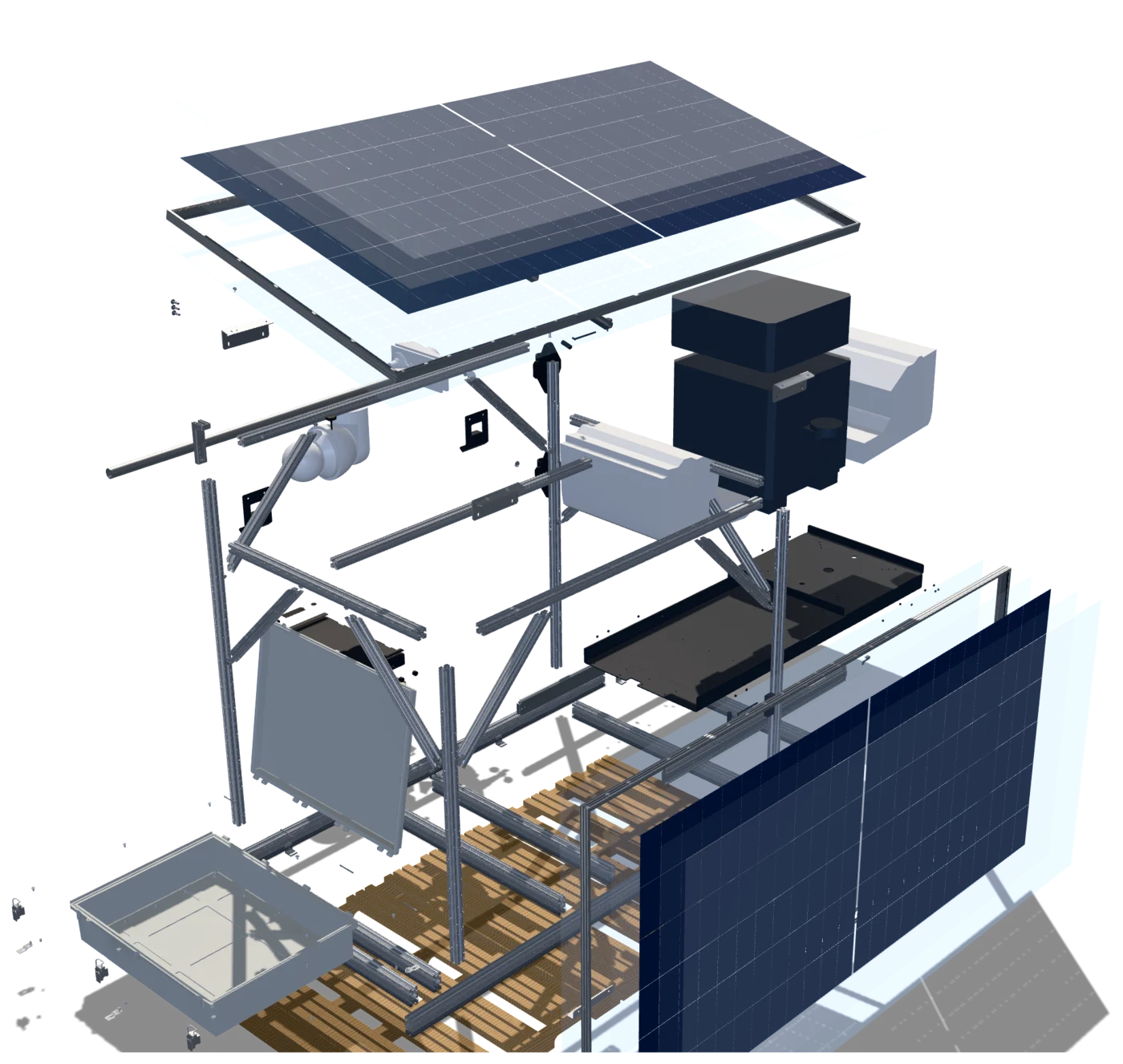
This is the real build, straight from our CAD. Drag to turn it, scroll to zoom, and hit Explode to see how it comes apart.
What’s inside: an aluminum T-slot frame on its own shipping pallet; a roof and a side solar module (dual-glass, 144 half-cut cells each) on angled mounts; a 24 V 230 Ah lithium battery; the drone dock on a locking slide-out drawer; a weatherproof equipment enclosure; and a sensor pole with the PTZ camera and weather station, which stows on racks for travel.
What one lift puts on your site
Six things you’d otherwise buy, wire and babysit separately.
01 · Power
Runs on the sun
Solar panels and an onboard lithium battery. No temp service, no generator to fuel, no waiting on the utility.
02 · Connection
Internet
The Nest brings its own connection, so the site is online the day the unit lands.
03 · Awareness
Weather tracking
A weather station on your site, not the airport 20 miles away. It feeds your pour schedule.
04 · Awareness
PTZ security camera
Pan, tilt, zoom. Watch the pour or check the gate without driving out.
05 · Action
Drone in a box
The drone lives on site, charges itself and flies on schedule. SkyMul pilots fly it remotely.
06 · Action
RTK GPS corrections
A base station on site, so every scan lines up with your control — and with yesterday’s scan.
In the field
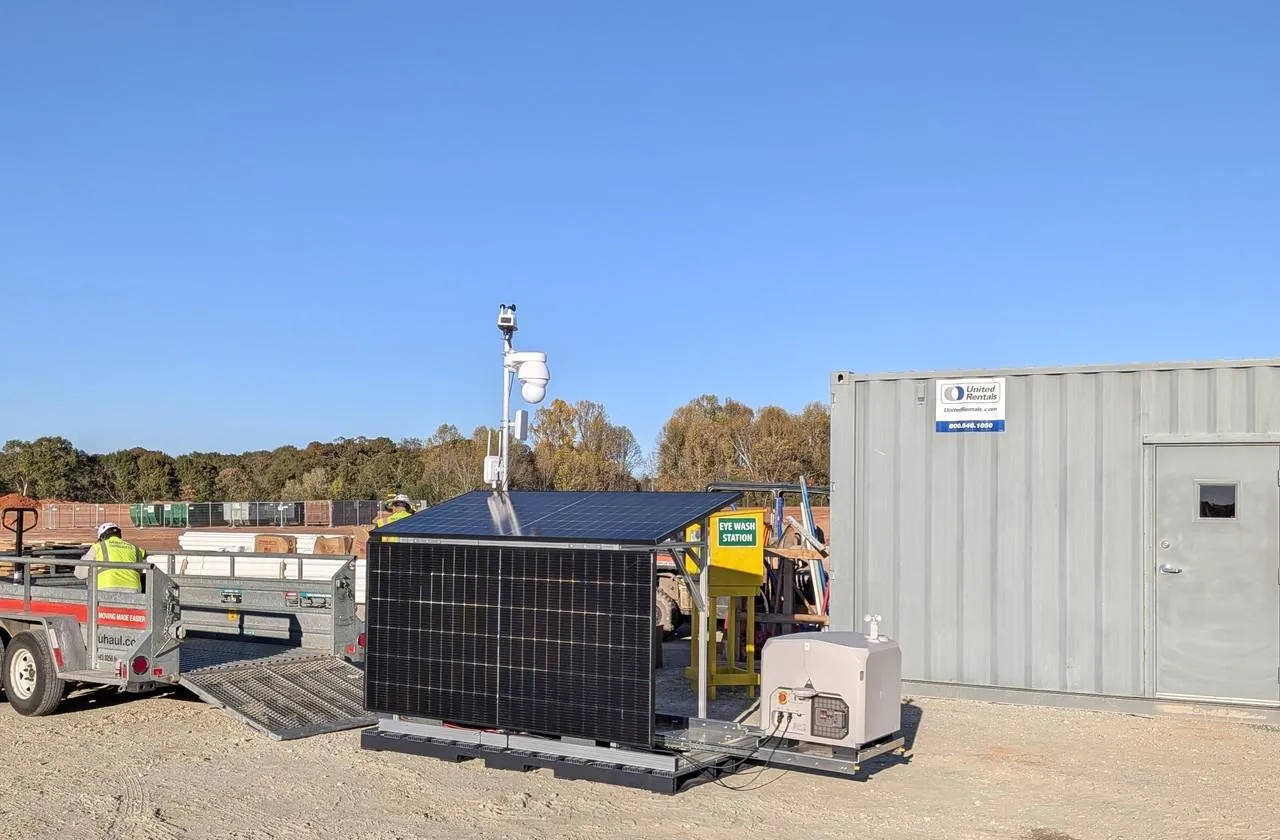
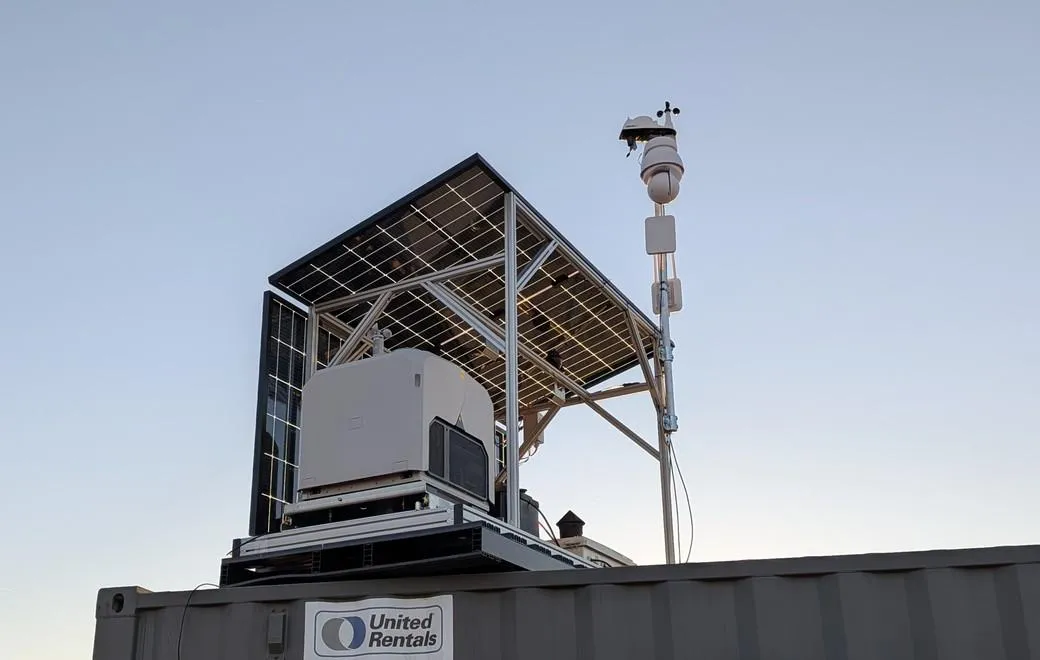
Off the trailer. On the container. Flying.
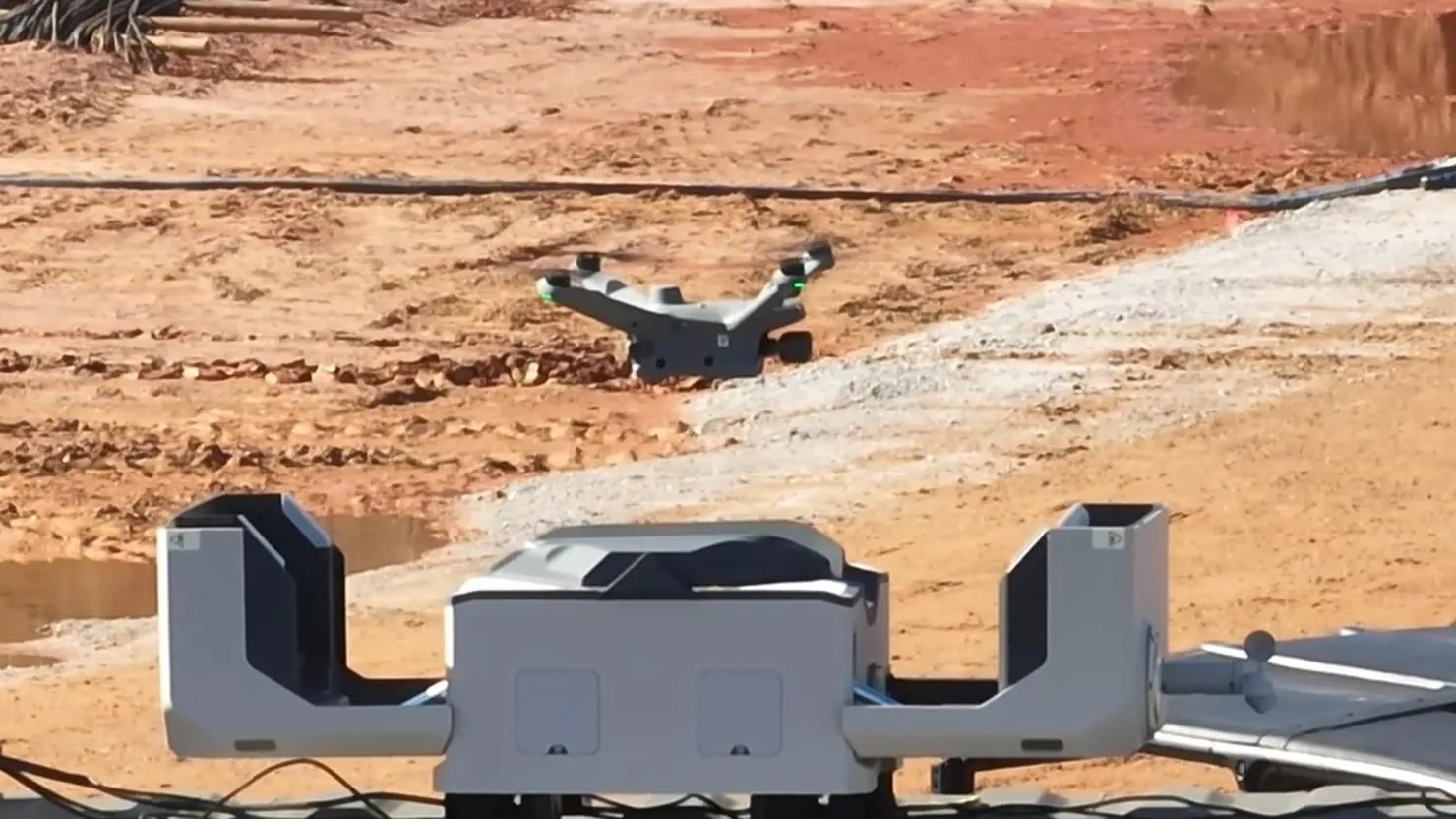
One product, two halves
Everything the Nest sees lands in GleeBuild.
Trig Nest isn’t a gadget with its own app. It is the eyes for the software your office, your super and your owner already look at.
DronefeedsSite view
Each flight becomes that day’s aerial and elevation map, sitting under your drawings.
Weather stationfeedsPour planner
Weather from your site — not the nearest airport — sits on the pour calendar.
PTZ camerafeedsLive view
Open the camera from the same place you check the panels.
RTK basefeedsEvery measurement
Scans line up with your control points, so a measurement on Tuesday matches one on Friday.
The short spec sheet
Mobilize first. Track everything.
From dirtwork to concrete, the whole job is on record — because the record started before the job did.
Book a site walk- Footprint
- 8 ft × 4 ft
- Overall size
- 9 ft 7 in × 4 ft × 5 ft 8 in, with solar mounted
- Sits on
- A standard site container (conex)
- Install
- One forklift lift, about 30 minutes
- Site work needed
- None — no trench, pad, or electrician
- Power
- Two 144-cell solar modules, 24 V 230 Ah lithium battery
- Connection
- Onboard internet
- Sensors
- Sensor pole with weather station and PTZ security camera
- Electronics
- Weatherproof, latching equipment enclosure
- Aircraft
- Docked drone on a locking slide-out drawer, flown on schedule
- Positioning
- RTK GPS corrections on site
- Accuracy
- ¼-inch XY
- Who flies it
- SkyMul FAA Part 107 pilots, remotely from Atlanta
- Airspace
- Remote flights under approved BVLOS conditions
- Terms
- Leased or owned
Questions about the hardware.
Do we need a drone, a pilot or a license?
No. SkyMul flies the site for you with FAA Part 107 certified pilots and cleared flight plans. With Trig Nest the drone lives on your site in its own box and we fly it remotely. Your crew never touches it.
Our site has no power and no internet yet. Is that a problem?
That is exactly what Trig Nest is for. It is one 8 ft × 4 ft unit that runs on its own solar and brings its own internet. A forklift sets it on top of your conex — no trench, no pad, no electrician — and the site is live from day zero.
How accurate is it?
¼-inch in XY. Scans are aligned to your survey control with calibrated targets and RTK GPS corrections from the Nest. That is tight enough to check embeds, anchor bolts, blockouts, form lines and slab edges against the drawing before the pour.
How fast can we be up and running?
Setting Trig Nest on site takes about 30 minutes. Most projects are live within 3–5 business days of the site walk — that is the time to set targets, load your drawings and clear the flight plan.
Is Trig Nest required to use GleeBuild?
No. On shorter jobs our pilots can fly the site on a schedule and you use GleeBuild the same way. Trig Nest is for sites that want capture every day — plus power, internet, weather and a camera — without anyone having to show up.
What does it cost?
Most contractors start with a 4-month pilot on one job: setup, daily flights and a monthly review with our team. After that it is a monthly platform fee per contractor — every user included — plus a monthly fee for each site we fly, with the Nest leased or owned. You get a written quote after the site walk, before you commit to anything.
Buried is final.
Look first.
Your next job has a few thousand things to get right before the trucks show up. Let us check them with you. Start with one job.
- Reply within one business day
- Written quote before you commit