Software for tilt-up concrete contractors
On a tilt-up job, the mistake is made on Tuesday and found on lift day.
Tilt-up is fast because you cast the walls on the ground. It’s unforgiving for the same reason: everything in the panel is fixed the moment the concrete goes in. This page is about the gap between those two days — and how to close it.
- Built on 14 paid jobsites
- 4M sq ft of slab tracked
- ¼-inch XY accuracy
Stage by stage
Where tilt-up jobs lose money.
- 1
Footings
What goes wrong
A footing a few inches off line, or anchor bolts turned the wrong way. Found when the panel or the steel won’t sit on it.
What it costs: Eccentric loads, engineered repairs, a crane standing by.
What we do about it
Footings are flown and laid under the foundation plan before they’re poured. Each footing is tracked by type, block and grid.
- 2
Casting slab
What goes wrong
The floor slab is your casting bed, so it has to be flatter and cleaner than a normal floor — and laid out for panels weeks before the first one is formed.
What it costs: Panels that don’t fit the bed, re-sequenced lifts, a surface that prints into every panel face.
What we do about it
Draw the slab pours over the site plan, slice them by day, and see the yards. An elevation map of the slab comes from the same flight.
- 3
Panel forms
What goes wrong
An embed five inches off. A blockout too narrow. A lift insert left out. A reveal on the wrong edge. About 50 things per panel.
What it costs: Field welding, coring, patching, a back charge — or a panel you break out and re-cast.
What we do about it
Every formed panel is compared with its own shop drawing, a person reviews the findings, and your crew gets a short list before the pour.
- 4
Pour day
What goes wrong
Rain you didn’t plan for. A hot, windy afternoon that cracks the surface. Tickets that never make it back to the office.
What it costs: Lost pours, plastic-shrinkage cracking, yards nobody can account for.
What we do about it
Pours sit on a calendar with site weather. An evaporation-rate reading warns you before the finish suffers. Tickets are read off a phone photo.
- 5
Lift day
What goes wrong
This is when most forming mistakes finally show up — with a crane on the clock.
What it costs: The most expensive hour on the job to discover anything.
What we do about it
Nothing new should show up here. That’s the point of checking before the pour.
Free to use — print it
The pre-pour panel checklist.
What to verify on every tilt-up panel between forming and the truck. Your engineer’s drawings and your own QC plan govern — this is a plain-words starting point.
Shape
- Overall width and height
- Squareness — measure both diagonals
- Panel thickness and form height
- Edge forms straight and braced
Openings
- Door and window blockouts: size and location
- Dock door openings
- Recesses and pockets on the correct face
- Chamfers and reveals: location and edge
Cast-in items
- Embed plates: location, orientation and face
- Lift inserts: count and position
- Brace inserts
- Sleeves and electrical boxes
- Anchor bolts and dowels
Steel
- Bar size and spacing
- Extra bars around openings
- Cover and chairs
- Laps and hooks
Before the truck
- Bond breaker applied
- Panel ID marked and facing the right way
- Form clean, no debris
- The right mix and yardage on order
Now multiply.
That’s one panel. A warehouse has a hundred or two. Nobody checks all of that by hand, every day, without missing one.
Have us check themHow SkyMul does it
Every panel, every day, against its own drawing.
- 1Our remote pilots
Capture
The drone flies your site from Trig Nest. Our team operates it remotely from Atlanta. Nobody on your crew stops work.
- 2Software
Check
Each scan is laid under the shop drawings, panel by panel, and compared — forms, embeds, blockouts, edges.
- 3Our team
Review
A person looks at every finding, throws out the false alarms and puts the next pour at the top of the list.
- 4Your crew
Deliver
Your super gets a short list of what to fix, pinned on the aerial. Each one is tracked until it is closed.
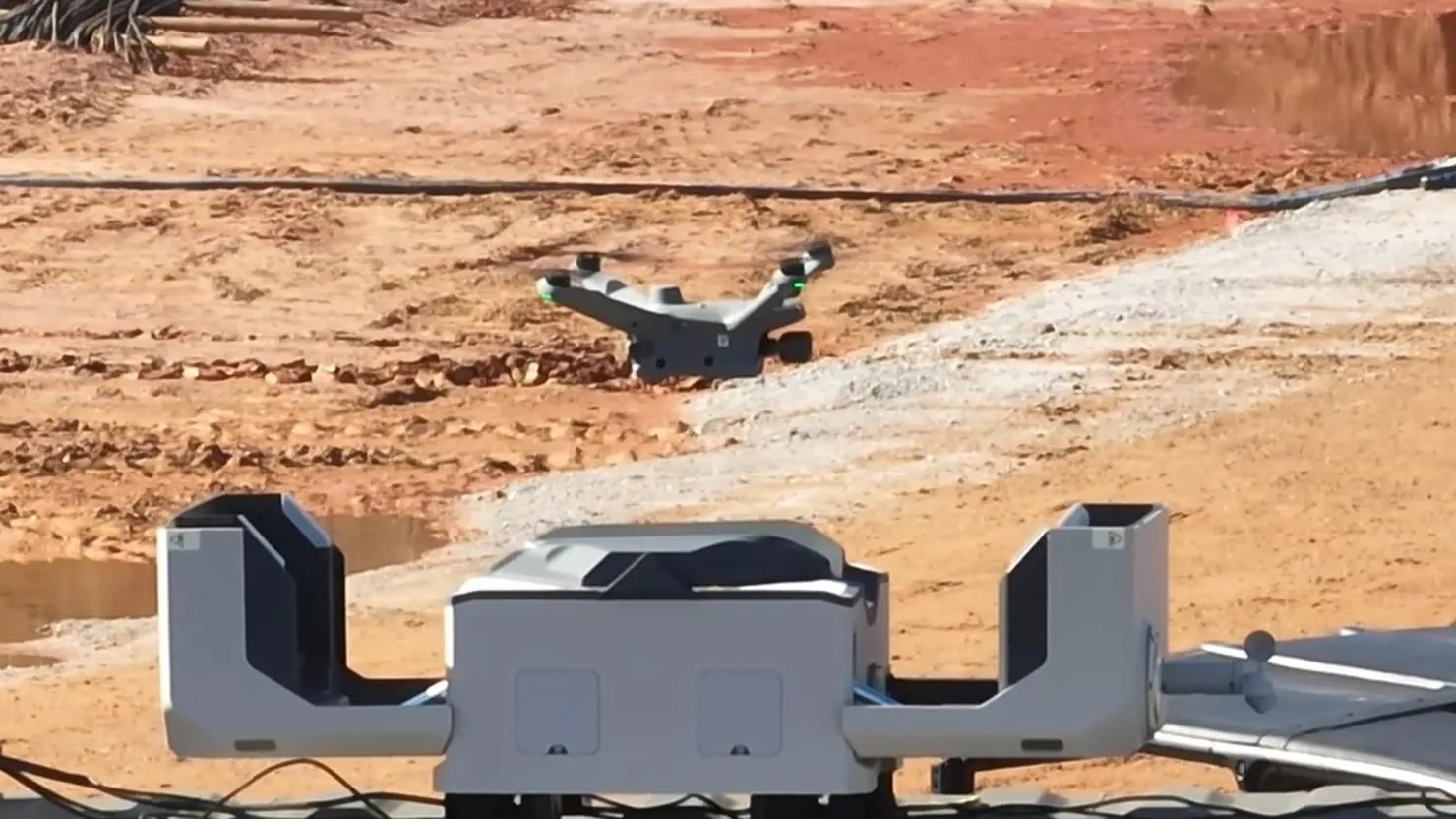
The flying is done from Trig Nest, a solar drone station that sits on your conex. The checking, the worklist and the rest of the concrete job live in GleeBuild.
One real job
192 panels. 26 mistakes that never got poured.
A tilt-up job in Bremen, Georgia. We tracked every panel against its own drawing, from forming to pour, flying the site remotely. Each pin below is something that was wrong in the forms — found while it could still be fixed with hand tools.
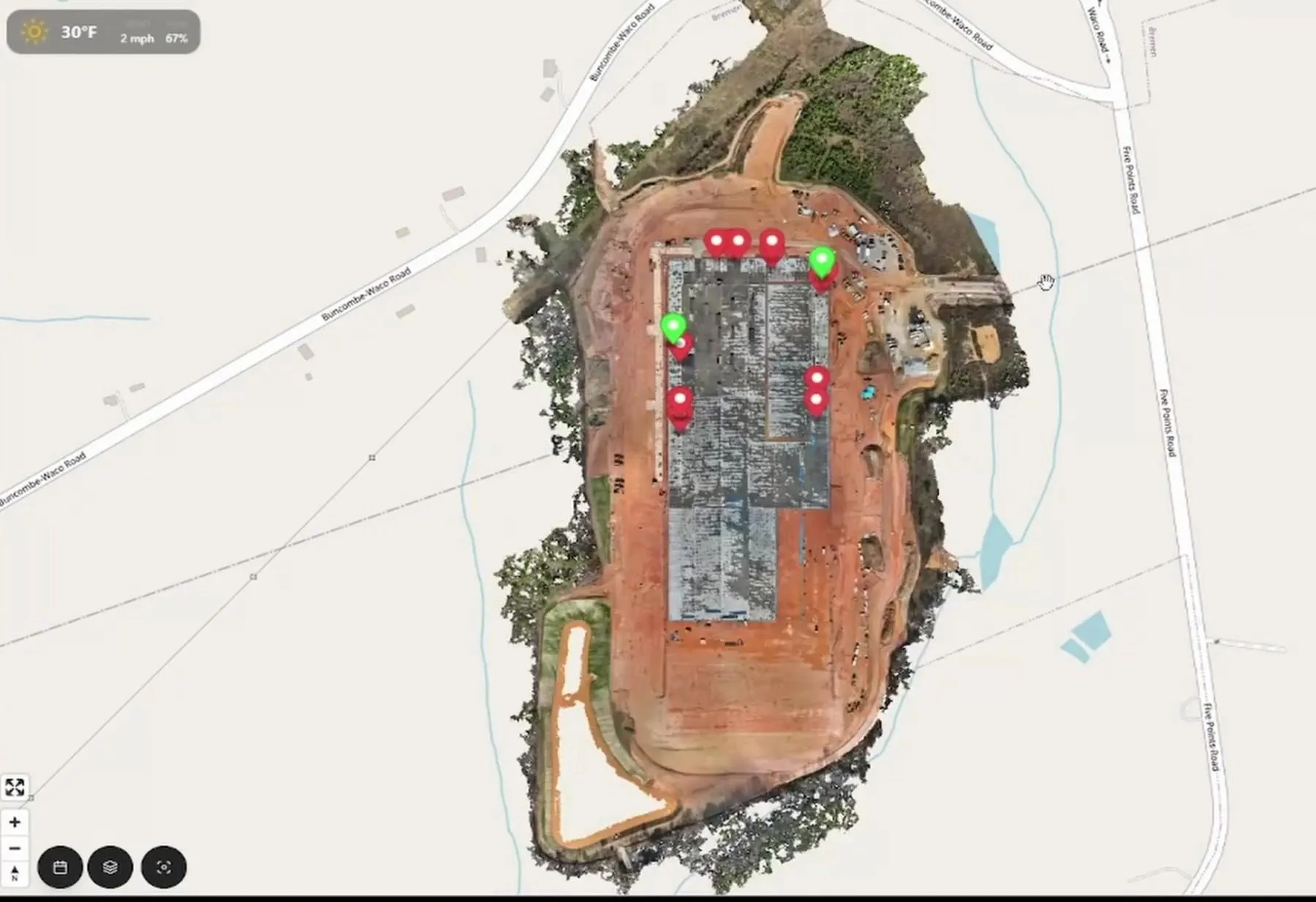
- 192
- panels tracked one by one, each against its own drawing
- 85
- scans flown remotely across the job
- 26
- issues caught before concrete was placed
Caught while the forms
were still open.
Three ways to check a panel
Tape, your own drone, or us.
| Tape and drawings | Your own drone | SkyMul | |
|---|---|---|---|
| Who does the checking | Your layout person | Whoever learned the drone | Software, then our team |
| Covers every panel, every day | When there’s time | When someone flies | Yes |
| Checked against the shop drawing | By eye | You do the comparing | Panel by panel |
| Needs a licensed pilot on your payroll | No | Yes | No |
| Works with no site power or internet | Yes | Batteries and a truck | Yes — Trig Nest |
| What your super receives | A marked-up drawing | A pile of photos | A short, pinned fix-list |
| A dated record of what was built | No | Photos in a folder | Every flight, kept |
How to start
One job. Four months. See what it catches.
Don’t roll anything out company-wide. Pick one job that’s about to start forming. We set up, fly it every day and review it with you every month. If it doesn’t pay for itself in rework you didn’t do, don’t take it to the next job.
- 1
Site walk
We look at the job with you and your drawings. You get a written quote.
- 2
The Nest lands
One forklift lift onto your conex. About 30 minutes. No trades.
- 3
Live in 3–5 days
Targets set, drawings loaded, flight plan cleared. Daily flights start.
- 4
Monthly review
We sit down with your team: what was caught, what it saved, what’s next.
- No drone or pilot to hire
- No power or internet needed
- Every user included
Tilt-up questions, answered straight.
What is pre-pour QC for tilt-up panels?
It is checking a formed panel against its shop drawing before concrete is placed: dimensions, openings, embeds, inserts, reveals and reinforcing. Once the panel is poured, anything wrong is cast in, so the hours between forming and pouring are the only cheap time to find a mistake.
How many things have to be checked on a tilt-up panel?
A single panel can need checks on about two dozen cast-in items plus the reinforcing — roughly 50 individual verifications. On a 100-panel building that is more than 5,000 items.
Can a drone really see an embed that is a few inches off?
Yes. SkyMul scans are aligned to your survey control with calibrated targets and RTK GPS, to ¼-inch in XY. Laid under the panel drawing, an embed that is five inches out is obvious.
Does this replace my layout crew or my QC person?
No. It gives them a second set of eyes that looks at every panel every day, and a list that tells them where to walk first.
What kind of tilt-up jobs is this for?
Warehouses, distribution centers and data centers — anything with a large slab, a lot of panels and a schedule that does not leave time for re-work. Most of our jobsites so far have been tilt-up data centers and warehouses.
Buried is final.
Look first.
Your next job has a few thousand things to get right before the trucks show up. Let us check them with you. Start with one job.
- Reply within one business day
- Written quote before you commit